- 0071: The Killers 2022 "BANKSIDE" Global Tour
- 0072: Michael Jackson’s 2019 "Rejuvenate / Hope-full" Tour
- 0073: Rag and Bone Man's "Not Failing" 2019 South Tyneside Tour
- 0074: Ed Sheeran's "Shine a light at Fram" sensational 2027 revival tour
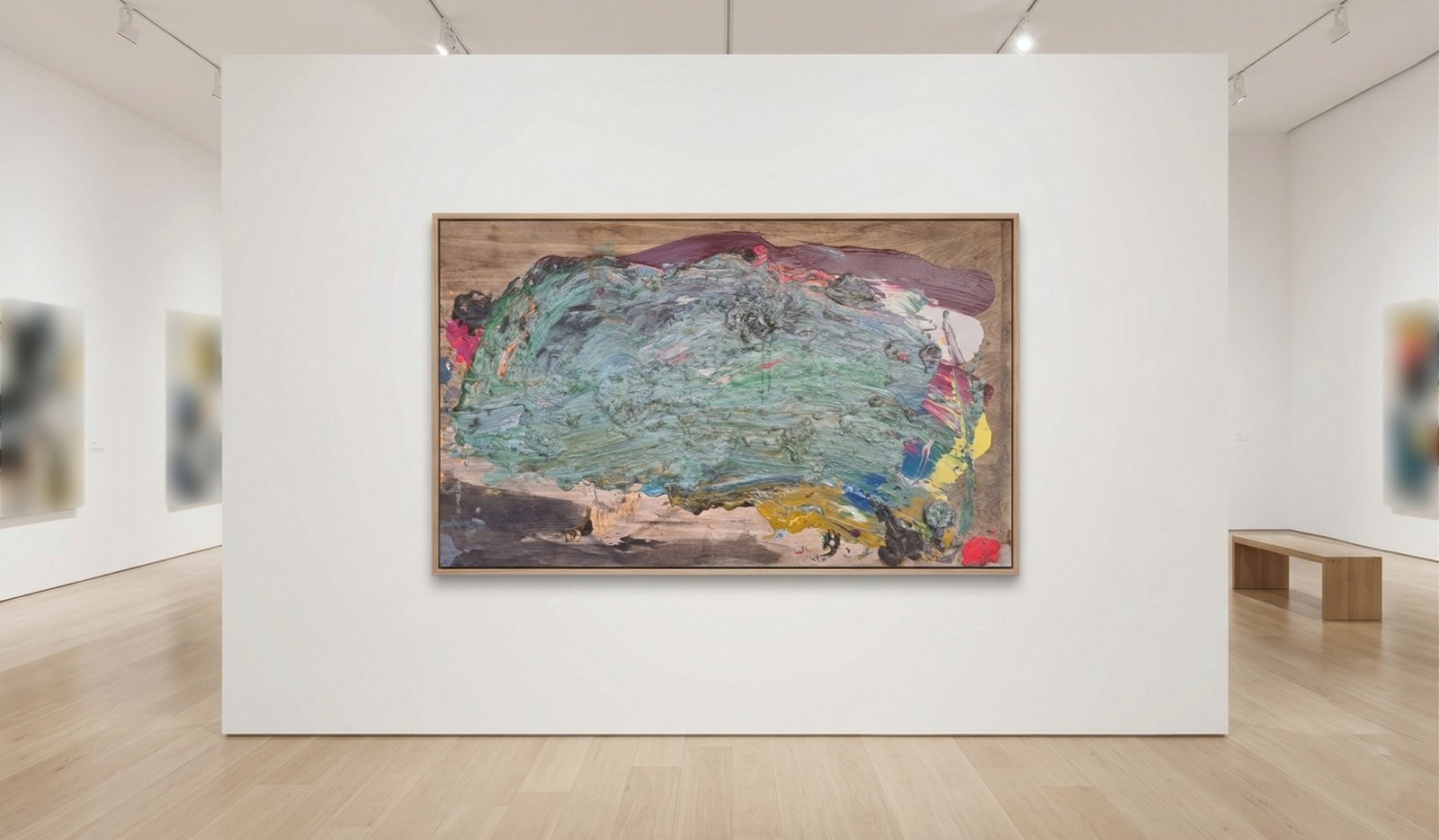
This is a striking example of abstract expressionism, where the physical process of creation is just as important as the final image. Here is a breakdown of its elements:
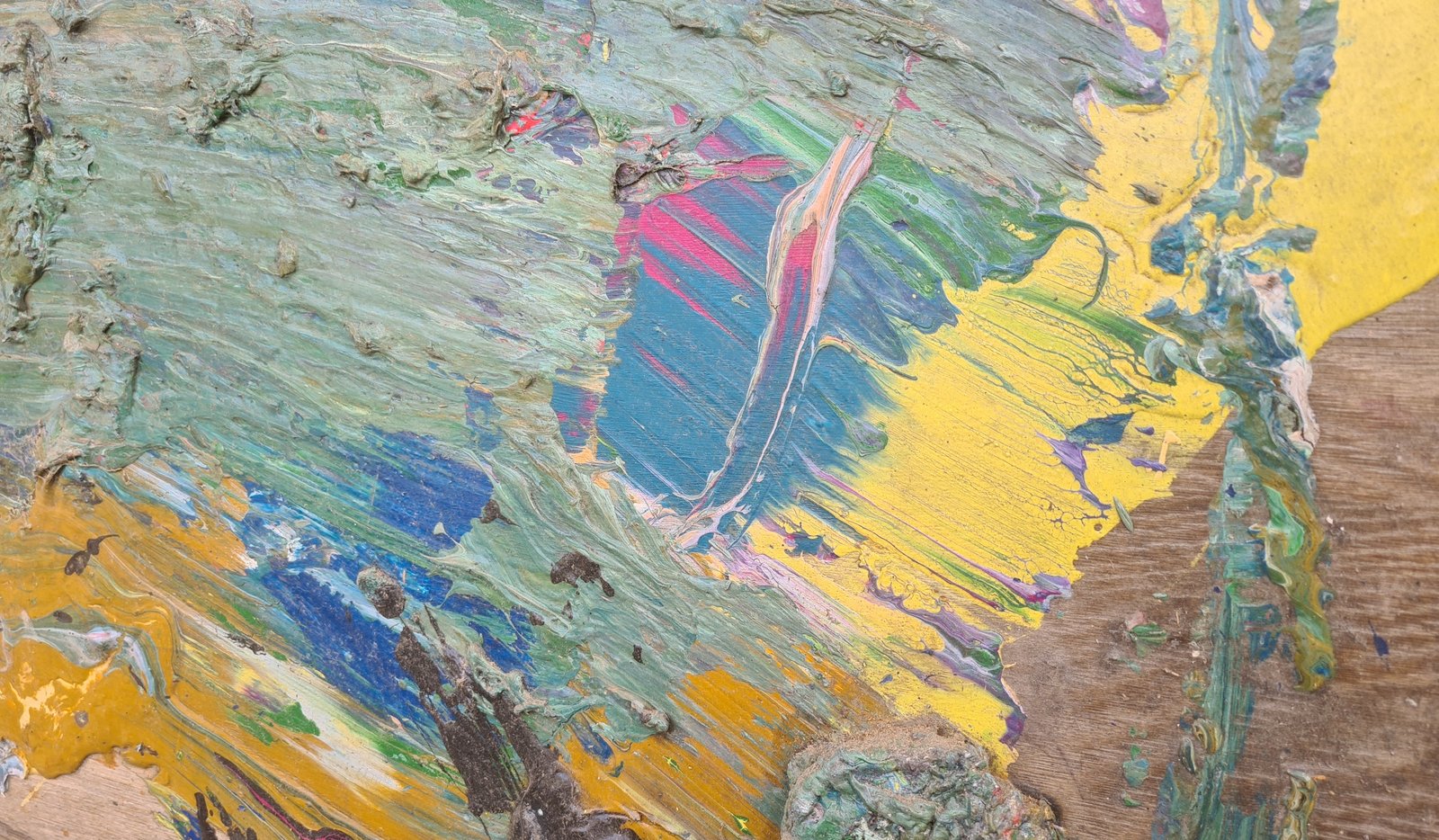
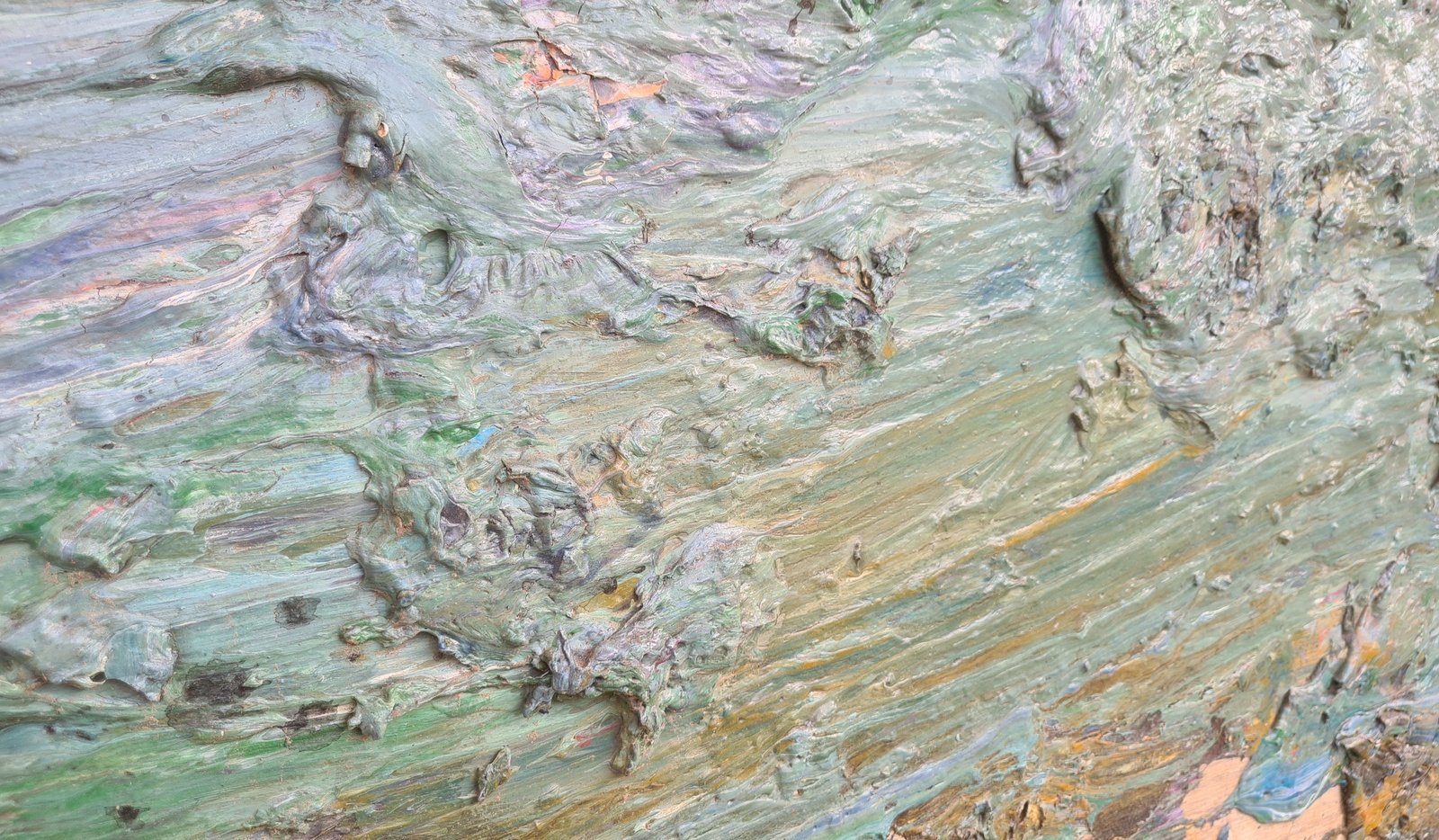
Composition and Texture: The piece is dominated by a dense, central mass of thick, impasto paint. The brushwork (or perhaps palette knife work) is incredibly tactile, with deep ridges and swirls that give the "subject" a three-dimensional, sculptural quality. It feels organic—almost like a mossy rock formation, a storm cloud, or a topographical map of a rugged terrain.
Color Palette: The colors are a sophisticated mix of earthy and vibrant tones:
The Core: A heavy concentration of sage greens, muddy blues, and slate greys.
The Highlights: Pops of magenta, bright yellow, and a singular streak of deep violet provide a sharp contrast to the more muted base.
The Canvas: Interestingly, the artist has left the raw wood (likely a plywood or timber panel) exposed around the edges. This grounds the "messiness" of the paint in something natural and structural.
Setting and Context: Presented in a minimalist gallery setting with a simple wooden frame, the painting acts as a "window" of raw energy against a sterile, white environment. The title, "Workbench No. 9" is particularly revealing—it suggests that this may actually be a functional workbench top that has been "framed" as art.
If this is indeed a section of an actual workbench, it recontextualizes the paint as a history of labor—years of drips, spills, and wipe-offs from other projects that have accidentally created a masterpiece.
Mood: The mood is one of industrial grit turned into beauty. It feels heavy, deliberate, and layered with time.